Sunday, March 17, 2024

Engine room 3 - Marinized diesels

Marinised diesels are usually based on an automotive (car) engine and have a few things added on to allow them to operate in the marine environment.

They are usually lighter weight, more compact, less costly and spare parts are more readily available/cheaper than standard "marine diesels".

Marinised engines have freshwater cooling, either by a saltwater/fresh heat exchanger on the engine or a "keel cooler" outside the hull. As a result the engines walls/housing can be allot thiner and lighter than marine diesels, as very little internal corrosion occurs. 

Kubota (Japanese) diesel engines have a very good reputation and are used in industry and agriculture ashore. If they are marinized properly, they make for reliable and economic propulsion at sea. Spare parts are readily available and are more cost effective than pure "marine diesels"

Nanni Marine diesel engines have a kubota base motor. They are made in France and I've heard that they are reliable, have quality long lasting parts and can supply everything from propellor to controls. The 29HP "N3.30" has a 3 cylinder 1123cc engine and runs at 3600rpm maximum, peak torque is 2600 rpm. It's size dimensions are not too big leaving more room inside.  They have keel cooling option. It runs a 12V 120A alternator, mechanical gear box and maximum 15 degree propshaft angle and weighs in at 145kg.

Nanni N3.30

Nanni also has a larger 37HP "N4.38" with a 4 cylinder 1498cc engine. It runs slower at 3000 RPM maximum and has a wider useful torque curve. It has larger size dimensions and is heavier than the 29HP but is rated for more usage and more hours per year than the 29HP. 

Beta Marine (UK) might be a good option. The Beta 25HP   has a 3 cylinder 898cc Kubota , weighs 113kg and often swings a 14" diameter 3 bladed prop (but it's best to supply boats specifications for correct prop) . The Beta25 is very compact and serviceable parts (oil filters, electrics etc) are easy to access.


At least a couple of wylo's have Beta Marine engines fitted. There is a distributor/service center in Sydney, Beta diesel Australia.

Witchards Marine (Sydney, Aust) make WM28. , 3 cylinder Kubotas with larger 1123cc displacement, larger size dimensions and swing a slightly larger prop. (The WM22 is a 898cc but 22 horsepower might not be enough for a wylo 35?)

 For those with technical skills and a flair for DIY, car engines can be marinised. Nick used his van's petrol engine. Heard of a VW golf diesel installation too.


Wednesday, January 10, 2024

Kerosene pressure stove

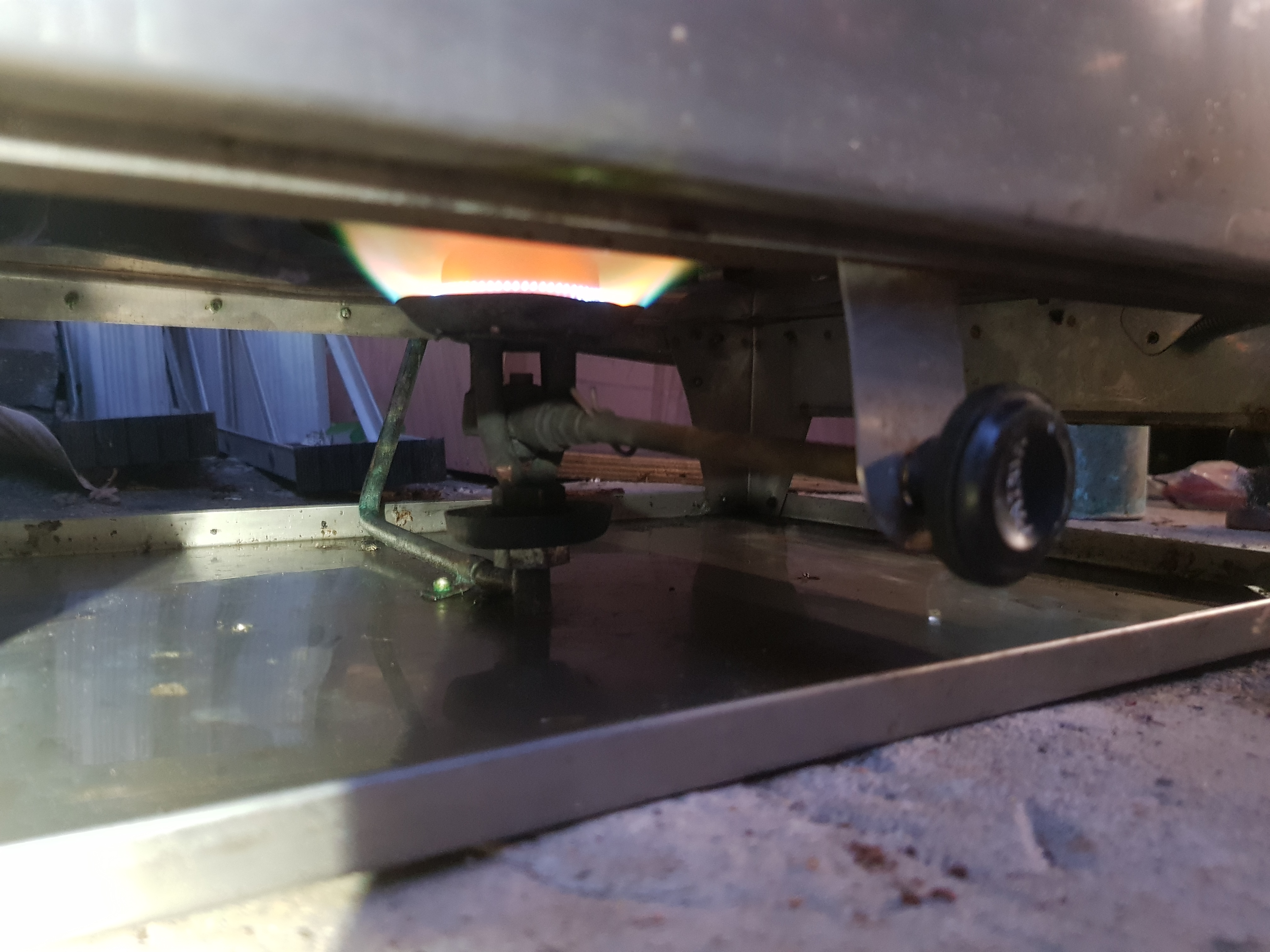
 Bought a secondhand "Handi" stainless steel kerosene stove for wylo, around 1980's vintage.

I heard about it through a mate on the Investigator563 online forum, for sale in Newcastle, NSW. (1600km south as the crow flies) Contacted Gordon the seller, he told me it was removed from a yacht during refitting/upgrade, the yacht had done a 6 year circumnavigation with this stove. It had sat in the shed over 10 years. It was shipped up north by land and arrived at the couriers base in a nice plywood box that Gordon had made up.

Two burners are on top and a third burner is inside the oven. It has adjustable pot fiddles and came with accessories/spare parts and a separate large kero tank attched with a flexible hose.

After cleaning it up a bit, it all connected up and it fired up first go!! (must have been well maintained, thanks again to Gordon).  


To operate it involves pressure pumping the kero tank with a bicycle pump, preheating the burner(s) with methylated spirits (alcohol) and opening the burner valve knob (s). There are preheating cups under each burner and it came with a neat little alcohol bottle with long spout.

Kerosene is a safe fuel onboard as it takes allot to ignite it, but once lit it has a very hot burn. Kero also stores well for ages and takes up less space/weight due to high calorific content. Kero is readily available in remote ports too. The only cons are, it takes a few minutes to light up, some people don't like the smell of it and it has unusual maintenance requirements compared with gas. 

I want to steer away from propane gas onboard due to explosion safety hazard, bulky large gas bottles on deck, and high cost/lack of of refills in some remote places (also different incompatible gas fittings overseas etc)

Kero stoves like this were once popular back in the bygone era on remote outback off-grid cattle stations (ranches). They also had kero refrigerators, kero heaters and kero blowlamps. It was the fuel of choice before the modern "propane gas" (and gas pipeline) era. 

I priced the new modern kero equivalents of my Handi stove (eg Taylors in UK) and they cost  thousands of dollars new. My old one represents good value then. 

Handiworks factory began production in the 1930's, was located in Brisbane, Queensland but closed down late 20th century. The burners etc are essentially the old kero "primus" type which are still made in places like India.


Another second hand buy i made locally was a 1950's Primus No1 kero single burner pressure stove. It's not running and needs some fettling (new pump cup, maybe a burner head). It's similar to the one Sir Edmund Hillary and Tensing Norgay used when they summited Mt Everest for the first time.


On a wylo this type could be fitted to a gimballed heat resistant box (like on wylo2 "Io") 


Saturday, February 25, 2023

Dinghy trailer

Recently did some steel fabrication at the wyloyard workshop. Upgraded my Fattyknees8 trailer by adding winch and an aft keel roller, so the strenous dinghy retreival heave-ho onto the fairly high converted 6x4' box trailer is no more. Just a satisfying and easy click-click click of the winch to get the dinghy onto the trailer now. Should look after the old shoulders and back too. 

More detail is in Waterways - Fatty knees trailer upgrade/maintenance


Wednesday, November 20, 2019

Concrete floor in workshop

The workshop originally had a dirt floor but this got too muddy in rain.

Decomposed granite or "Deco" as it is known locally was spread out over work areas for a solid surface to work on (also used for driveways)

Years ago the workbench and caravan annexe areas were cemented  over when some free leftovet concrete from a contractor was available. These made a big difference to workability.

Last week some gaps in the workshop floor were concreted over. Prep was to clean loose gravel off the floor and set up straight wooden edges. I hand mixed concrete with a shovel in a wheel barrow, and plastered it onto the ground about 20 mm thick, it may not seem much but the 'deco' base is fairly hard, already compacted and was about 50 mm thick. The test slab under the workbench has stood up to a couple of years of bashing on the workbench no worries.


The new floor makes it easier to get around and reduces the ammount of dirt tramped into the shed.


Tuesday, November 13, 2018

Side tracked by a trailer

Sorry not many posts of late, however some kind of boat-associated building is going on at the yard.

Fabricating (and re-designing) a new boat trailer for TS "Teria". The old trailer gave up the ghost over a year ago, nearly right where the boat is blocked up now, it picked a good place to depart.

The new trailer is about 70% done -  next up are side bunk posts and clamps. The brakes, axle, leaf springs etc are refurbished and ready to go back on.


So here's the link to the boat trailer build

Update 25/2/23:  The "Teria's" trailer was completed in October 2021. It works like a charm compared to the original. The longer drawbar is key, now the boat mostly floats on and only has to be winched up the last bit. Just have to be aware of low tides and end of ramp drop-off's (usually marked on pontoon, or can find it with an oar or boat hook).